
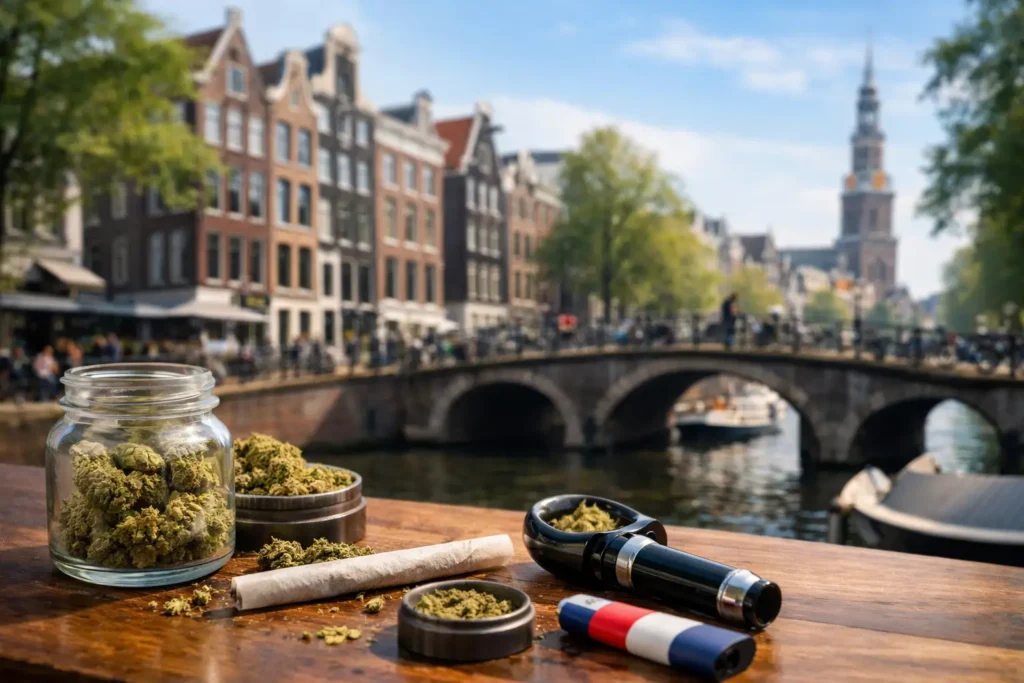
Amsterdam’s cannabis reputation is real, but the postcard version leaves out the rules. If you are asking, can you smoke weed in Amsterdam, the practical answer is yes, usually in a licensed coffeeshop or private setting – but not wherever you happen to be standing with a joint.
For travelers, the key distinction is between what Dutch law prohibits and what local authorities tolerate under strict conditions. Cannabis is not fully legal in the Netherlands. Coffeeshops operate under a tolerance policy, and Amsterdam has added public-smoking restrictions in parts of the city. Treat cannabis as something to enjoy thoughtfully, not as an all-access pass.
Can You Smoke Weed in Amsterdam Legally?
Cannabis remains illegal under Dutch law, yet the possession and sale of small quantities are often tolerated. This policy is called gedoogbeleid, meaning authorities may choose not to prosecute certain low-level cannabis activity when specific rules are followed.
For an adult visitor, that generally means a licensed coffeeshop can sell cannabis for personal use, typically up to 5 grams per person per day. You must be at least 18, and you may be asked for valid identification. Coffeeshops are not ordinary cafes despite the name: they are regulated businesses, and they cannot sell alcohol.
The important catch is that tolerance does not mean a blanket right to use cannabis in public. Police and municipal enforcement can act when you create a nuisance, carry more than a personal amount, buy from street dealers, or smoke in a restricted zone. The city’s rules matter just as much as the national framework.
Where You Can and Cannot Smoke
The simplest travel rule is this: smoke inside a coffeeshop only if that particular venue allows it, or consume in a private place where the owner and house rules permit it. Do not assume every coffeeshop has a smoking lounge. Some allow on-site consumption, while others have limited seating, separate smoking areas, or rules against smoking altogether.
Tobacco rules are especially relevant. Smoking tobacco indoors is generally prohibited in Dutch hospitality venues. A coffeeshop may permit cannabis without tobacco, but it can still restrict smoking based on ventilation, staff policy, or local enforcement expectations. Ask before lighting up, and do not presume that rolling tobacco into a joint is acceptable indoors.
Public smoking is where many visitors get caught out. Amsterdam has prohibited smoking cannabis in designated public areas, especially around the Red Light District and other busy central spaces where crowding and nuisance complaints are common. Signs mark restricted areas, but visitors should not rely only on spotting one at the last minute. If you are in a dense tourist zone, near schools, transit hubs, or residential entrances, assume smoking is a bad idea until you confirm otherwise.
A fine is possible for smoking in a prohibited area. Enforcement can change by neighborhood and season, so the respectful move is to follow posted rules and any instruction from city officers. Sitting on a canal bridge, outside a bar, or in a packed square is not the carefree Amsterdam experience many travelers imagine. It can also be inconsiderate to people who live and work there.
What About Parks, Hotels, and Rental Apartments?
Parks are not automatically safe places to smoke. Even where no specific prohibition is posted, smoking can attract complaints or enforcement if it bothers others. Families, children, nearby residents, and the overall atmosphere matter. A quiet outdoor setting may feel informal, but public consumption is still public consumption.
Hotels and hostels set their own policies, and many are strictly smoke-free. That includes balconies, windows, shared courtyards, and dorm rooms. A cannabis smell can lead to cleaning fees, eviction from the property, or an unpleasant conversation with reception. Ask before booking if on-site use matters to you, and get the answer directly from the accommodation rather than trusting old reviews.
Short-term rentals can be even more complicated. The host, building association, and local rules may all prohibit smoking. Never smoke in hallways, stairwells, elevators, or outside a neighbor’s window. If private consumption is permitted, keep it discreet, ventilated, and respectful. If it is not clearly allowed, choose a coffeeshop that provides a legal, comfortable place to consume instead.
How Coffeeshops Work for Visitors
Amsterdam coffeeshops are a recognizable part of the city’s cannabis culture, but the best experience is usually the least dramatic one. Bring a physical ID, follow the door policy, and take a moment to read the menu before ordering. Staff are used to travelers and can often explain the difference between flower, pre-rolls, hash, edibles, and lower-strength options.
Do not buy cannabis from people on the street. Street sales can involve fake products, poor-quality cannabis, theft, or unwanted attention from police. Licensed coffeeshops are the appropriate place to purchase cannabis under Amsterdam’s tolerance system.
You also do not need to prove you are an expert. If you have a low tolerance or have not used cannabis recently, say so. Dutch products can be stronger than what some travelers expect, particularly concentrated hash and edibles. Start with a small amount, wait, and avoid turning a relaxed afternoon into a stressful medical situation.
Edibles require extra patience. Their effects can take much longer to appear than smoking or vaping, often leading visitors to take more before the first dose has fully kicked in. Avoid mixing cannabis with alcohol or other substances, particularly if you are unfamiliar with the product or navigating a busy city afterward.
Rules That Matter Beyond the Coffeeshop
A coffeeshop purchase does not give you permission to carry cannabis across borders. Do not take cannabis onto a train, plane, cruise ship, or international bus – even if you are traveling to another country with relaxed cannabis laws. Crossing a national border with cannabis can create serious legal consequences.
Driving after using cannabis is also a poor choice. Dutch impaired-driving laws apply to cannabis, and a rental car is not a workaround. The same goes for bikes, scooters, and other vehicles: Amsterdam traffic is fast, complex, and full of pedestrians, trams, and cyclists. Save cannabis for when your travel day is done.
Keep purchases modest. The tolerated personal quantity is generally up to 5 grams, but carrying more can change how authorities view the situation. Large amounts, repeated purchases, public dealing, or any involvement with hard drugs fall well outside the coffeeshop system.
Visitors may also hear conflicting advice about whether tourists can enter coffeeshops. National policy has allowed municipalities to use a residents-only rule, sometimes called the weed pass. Amsterdam has historically not applied that rule to exclude foreign visitors, so tourists are generally able to use Amsterdam coffeeshops. Still, individual door policies and municipal enforcement approaches can change, so carry ID and be prepared to follow the venue’s requirements.
Local Etiquette Makes a Better Trip
Amsterdam is a working city, not a theme park for cannabis tourism. The local etiquette is straightforward: do not block entrances, do not smoke beside people who have not chosen to be around it, keep noise down at night, and dispose of ash and packaging properly. In residential streets, discretion goes a long way.
Cannabis can be part of a great Amsterdam visit, alongside museums, food, canals, music, and neighborhoods beyond the center. It should not be the reason you miss your tram stop, disturb a host, or end up with a fine in a restricted area.
Before you light up, check the venue rules, look for city signage, and consider who is around you. Amsterdam is welcoming to informed adult visitors, and a little awareness is what keeps a cannabis stop on your trip relaxed rather than becoming one of those legal weed hiccups you did not plan for.
