
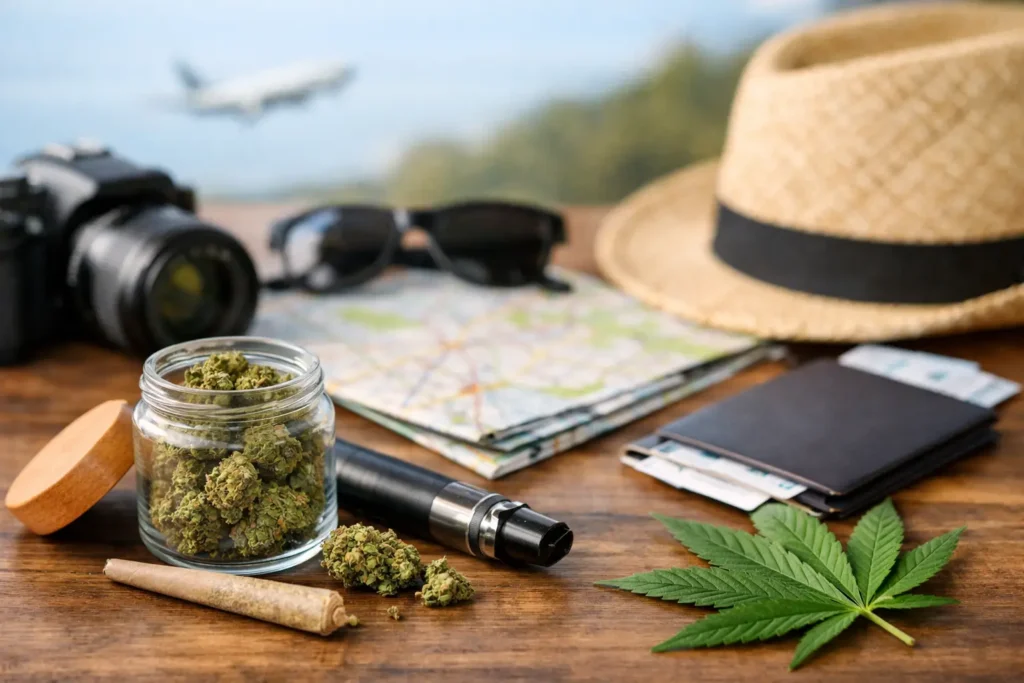
A cannabis-friendly vacation can become a legal headache before you leave the airport. The best weed travel tips start with one simple rule: treat every destination as its own legal and cultural world. What is normal in one city may carry a fine, confiscation, or worse a few hours away.
Cannabis travel is not just about whether weed is legal. It is about where it is allowed, who can use it, what form is permitted, whether public consumption is tolerated, and how local authorities actually enforce the rules. A little research before departure gives you more freedom to enjoy the place you came to see.
Best Weed Travel Tips Before You Book
Check the law at the city level, not just the country level
National headlines can be misleading. A country may permit medical cannabis but not recreational use. It may decriminalize personal possession while still prohibiting sales. It may allow cannabis in private while treating public consumption as an offense.
Cities can add another layer. In some destinations, local rules regulate where cannabis businesses can operate, where smoking is allowed, and how police handle small possession cases. Tourist districts may also be more closely monitored than residential neighborhoods. Look beyond a simple legal or illegal label and learn the rules for the exact city, region, or island on your itinerary.
Never cross a border with cannabis
This is the rule with the least room for exceptions. Do not take cannabis across an international border, even when both your departure point and destination allow adult use. Do not bring it into an airport for a later flight, and do not leave it in a checked bag, carry-on, vehicle, or forgotten jacket pocket.
The same caution applies to CBD products, edibles, vape cartridges, oils, and cannabis-infused wellness products. Labels do not guarantee that border officials will view an item as legal. Rules around hemp-derived cannabinoids vary widely, and products that are ordinary at home can trigger problems abroad. Finish, dispose of, or leave products behind before entering the travel process.
Do not rely on your medical card as a travel passport
A medical cannabis recommendation or state-issued card can be meaningful at home, but it rarely grants automatic rights in another country. Some jurisdictions have formal programs for visitors, while others do not recognize foreign prescriptions at all. Even where medical cannabis is legal, the permitted products, possession limits, and access process may be entirely different.
If cannabis is part of your medical routine, speak with a qualified medical professional well before the trip and research the destination’s official import and prescription requirements. Do not assume that carrying a doctor’s note makes a cannabis product acceptable at customs.
Plan for the Place, Not the Stereotype
Know the difference between access and legality
A destination may have a visible cannabis scene without offering legal retail access to visitors. Another may have regulated stores but strict rules against use outside private residences. In some places, social clubs, coffee shops, or private member spaces operate under rules that are unfamiliar to first-time visitors.
That distinction matters. Seeing people consume cannabis does not mean you can legally purchase it, carry it, or light up nearby. Tourist-facing offers can also be misleading. If something feels unclear, overly casual about the law, or designed to pressure you into a quick purchase, walk away.
Research your lodging before you arrive
A legal destination does not mean your hotel, hostel, rental, cruise cabin, or resort permits cannabis use. Many properties ban smoking and vaping of any kind, and a violation can lead to cleaning fees, removal from the property, or a lost deposit. Balconies, windows, hallways, and shared outdoor areas are often covered by the same restrictions.
If private consumption is legal where you are visiting, confirm the property’s written policy before making plans. Do not put hosts or staff in an uncomfortable position by asking them to bend the rules. Respecting the accommodation is part of respecting the destination.
Keep public spaces truly public
Public use is one of the most common ways travelers get into trouble. Parks, sidewalks, beaches, transit stations, nightlife areas, and outside major attractions may all be off-limits, including in jurisdictions with legal adult-use cannabis. The smell alone can draw unwanted attention, especially around families, schools, government buildings, or crowded events.
Local etiquette matters as much as the written rule. In some cannabis-friendly cities, discreet behavior in the right setting is expected. In others, cannabis is still socially sensitive even if possession penalties have eased. Follow posted signs, give people space, and do not treat another community as a backdrop for behavior you would avoid at home.
Make Safer Choices Once You Arrive
Use only legal, regulated options when they exist
Where legal retail is available to adult visitors, regulated businesses are generally the safer choice. Licensed operations are more likely to provide age checks, packaging information, and products that have been subject to local testing requirements. That does not eliminate every risk, but it is a better position than relying on a stranger, a street pitch, or an unverified social-media account.
If no lawful path to access exists, accept that the destination may not be the place to use cannabis. It is better to change the plan than to gamble with a scam, contaminated product, or an encounter with law enforcement.
Start lower than you would at home
Travel changes your routine. Jet lag, dehydration, altitude, heat, unfamiliar food, alcohol, and a busy sightseeing schedule can all affect how you feel. Products may also be stronger, differently labeled, or sold in serving sizes you do not recognize.
If you choose to consume legally, keep the first experience modest and avoid mixing substances. Edibles deserve extra patience because effects can take much longer to arrive than smoking or vaping. Taking more too soon is a classic travel mistake, particularly when you are far from your hotel and trying to navigate an unfamiliar city.
Make a transportation plan before consuming
Do not drive, ride a scooter, operate a boat, rent a bike in heavy traffic, or handle any vehicle while impaired. Cannabis laws may be more severe around driving than around possession, and roadside testing rules are not consistent from place to place. A rental car is not a private escape from local laws.
Plan a walkable route, use public transit if it is safe and available, or arrange a licensed ride. Keeping your return trip simple lets you enjoy the evening without turning a minor decision into a dangerous one.
Carry only what is allowed and keep it stored properly
Possession limits can be surprisingly specific. A destination may allow one amount in private, another amount in public, and no open product in a vehicle. Original packaging can be useful where it is required or expected, but packaging from another jurisdiction does not make an item legal.
Keep products secured, out of reach of children, and away from anyone who has not chosen to be around cannabis. Never offer cannabis to a stranger or assume another traveler is of legal age. Friendly travel culture still depends on consent and common sense.
Stay Current When Rules Change
Cannabis policy moves quickly, but enforcement practices can move more slowly. A new law, court decision, or local pilot program may be reported online before practical details are clear. Old forum threads are especially risky because they can make a past tolerance policy sound current.
Check current destination-specific guidance shortly before departure and again if your itinerary changes. Local Weed Guide is built around this city-by-city reality because the answer to “Can I use cannabis there?” is rarely complete without asking where, when, and under what conditions.
The best cannabis travel experiences are usually the least dramatic: you understand the rules, avoid the border risks, respect the people around you, and leave with memories that have nothing to do with explaining yourself to airport security.
